Carara National Park
Carara National Park is located on Costa Rica’s Central Pacific coast, about 90 kilometers from San José and just south of the Tárcoles River. The park protects a unique transition zone where the drier forests of northern Costa Rica meet the wetter tropical forests farther south, creating a habitat where a wide variety of plants and animals can be found. The surrounding Tárcoles area also adds rivers, wetlands, and other habitats to the region, making it an excellent place to see wildlife.
Why Visit Carara National Park?
Wildlife to See in Carara:
Scarlet Macaw
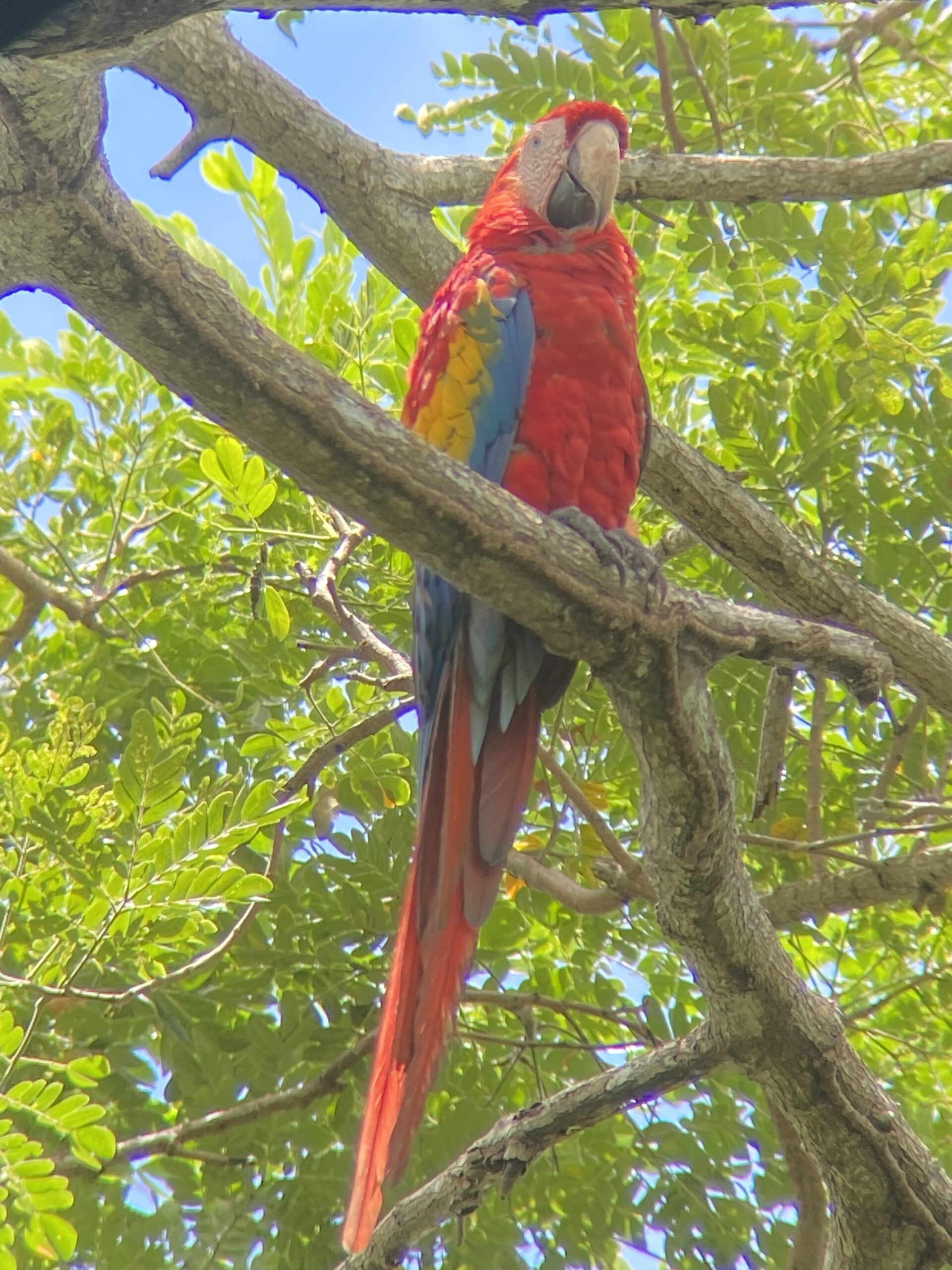
The Scarlet Macaw is arguably Carara’s most famous animals and one of the easiest birds to associate with Costa Rica’s Central Pacific region. These enormous parrots are unmistakable, with brilliant red plumage contrasted by yellow and blue feathers on their wings. Carara protects an important population of Scarlet Macaws and is considered one of the country’s premier places to see them in the wild. They feed heavily on fruits, seeds and nuts and use their powerful bills to crack open hard food. Their loud calls and large size also make them much easier to notice than many of the smaller birds found in the park.
Yellow-throated Toucan
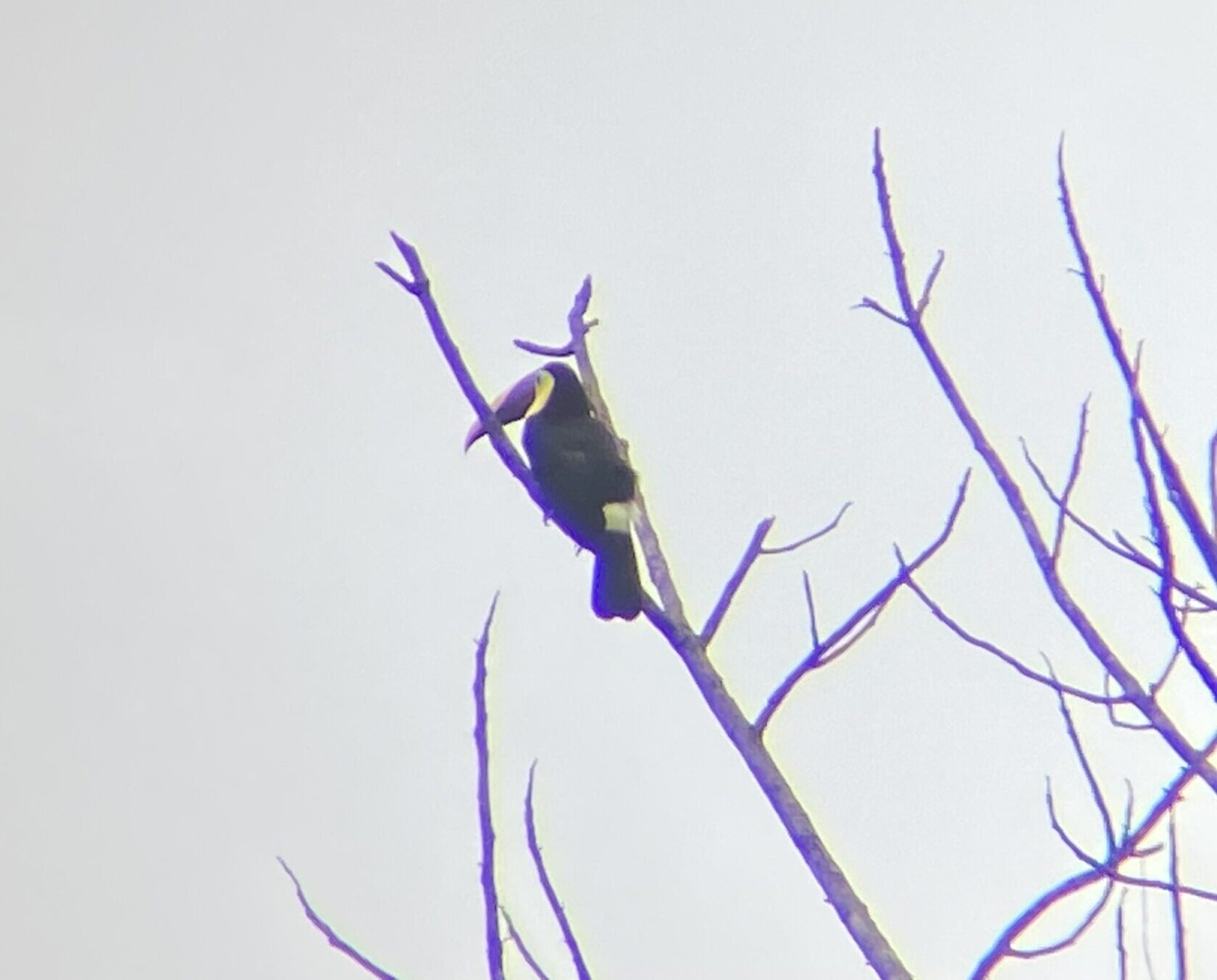
The Yellow-throated Toucan is one of the largest toucans found in Costa Rica, reaching around 56 cm in length. Its enormous bill, yellow throat and chest, black wings and reddish undertail make it difficult to confuse with most other birds in the forest. Despite the size of its bill, it is surprisingly lightweight because the bill is largely composed of a lightweight keratin structure. The species feeds heavily on fruit and lives primarily in the canopy of humid forests, making Carara’s rich forest habitat an excellent place to look for it.
Mantled Howler Monkey
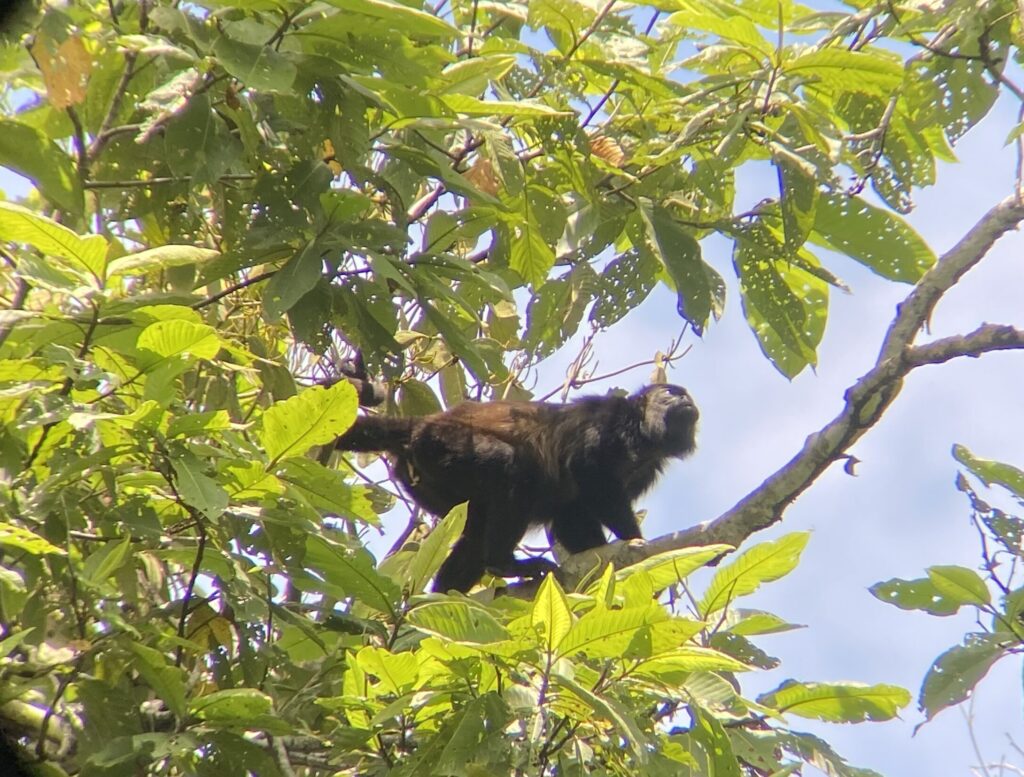
Mantled Howler Monkey in the forest canopy 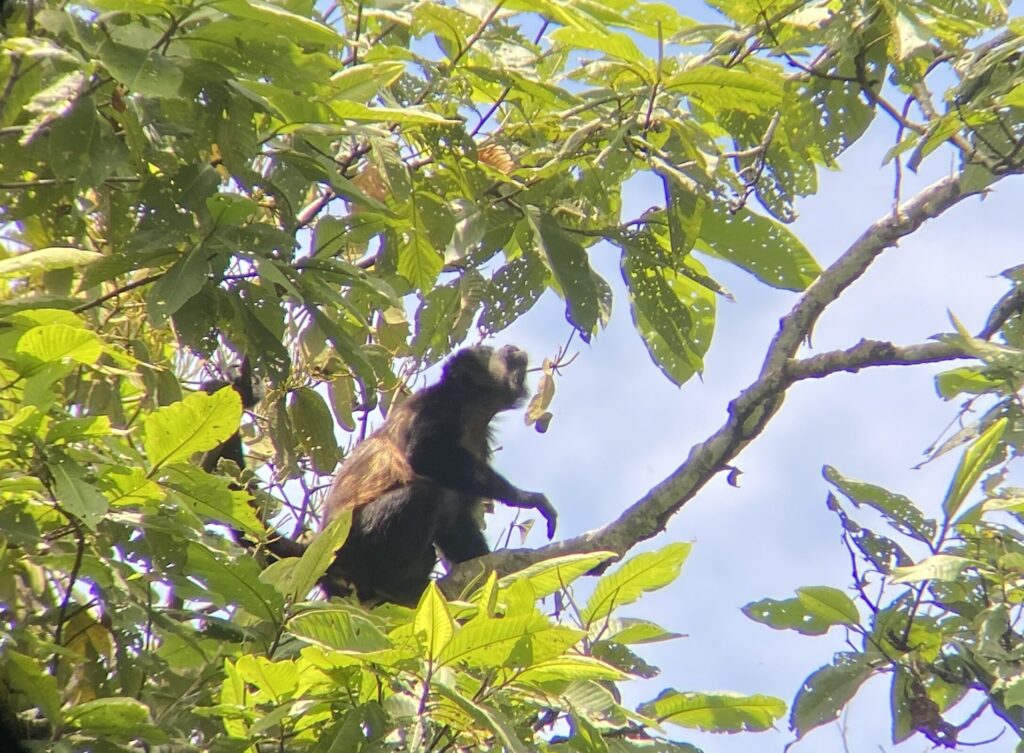
The Mantled Howler Monkey is one of Costa Rica’s most recognizable monkeys, and you are often more likely to hear one before you see one. It’s incredibly deep howls can travel long distances through the forest and are used to communicate and establish territory. Mantled Howlers live in social groups and spend much of their time high in the forest canopy, feeding primarily on leaves along with fruits and other plant material. They can inhabit both wet and dry forests, making Carara’s unusual mixture of forest types suitable habitat for them.
Green-and-black Poison Dart Frog
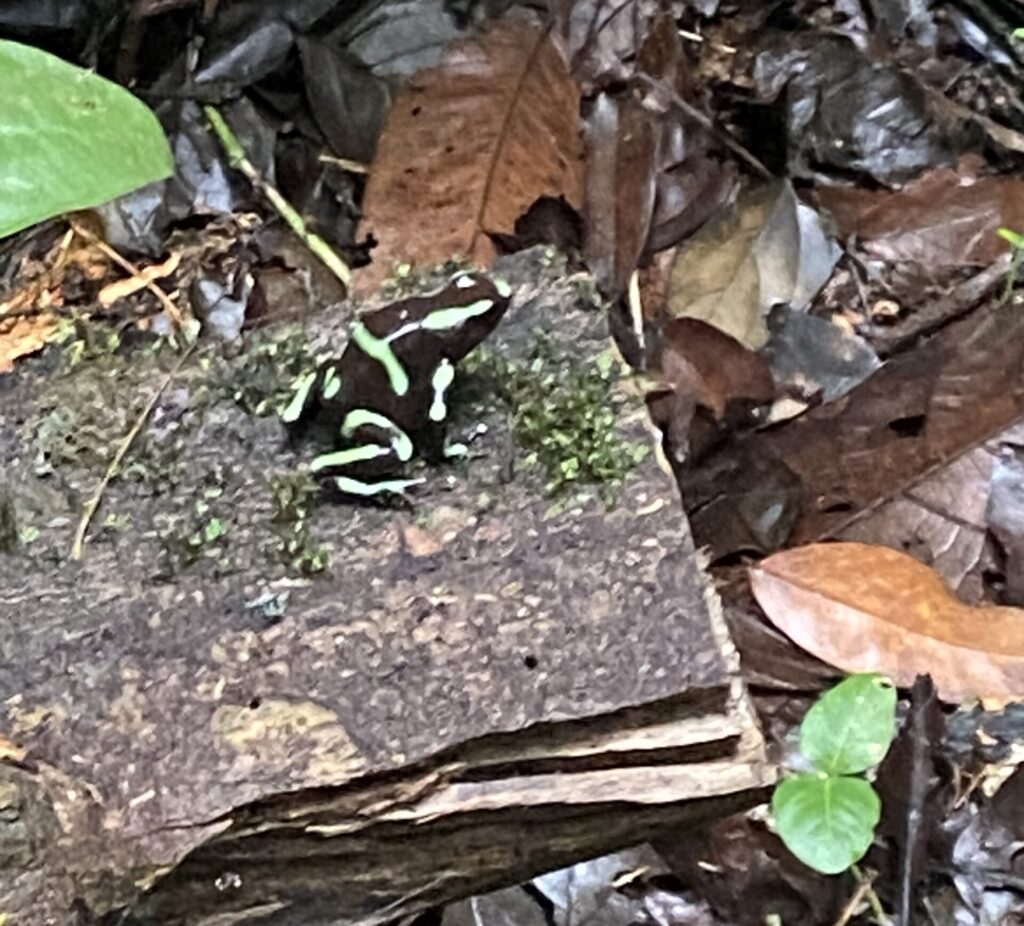
Green-and-black Poison Dart Frog on the forest floor 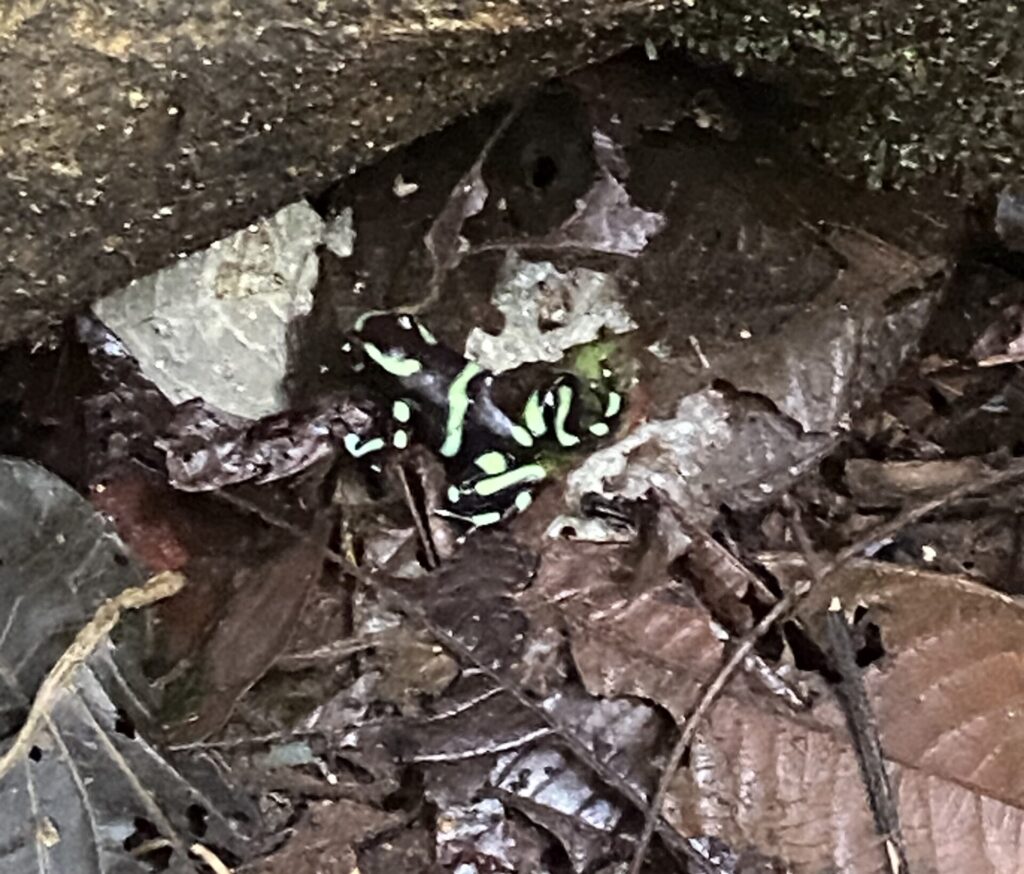
The Green-and-black Poison Dart Frog is a small, brightly colored frog found on the forest floor of Central America, including Costa Rica. Its striking green-and-black pattern is an example of aposematic coloration, a warning to potential predators that the frog is toxic. Wild individuals obtain their defensive chemicals from their diet, rather than producing them entirely on their own. They are tiny, measuring only about 2.5–4.2 cm from the snout to the end of the body, so spotting one among the leaf litter can be surprisingly difficult despite its vivid colors.
American Crocodile
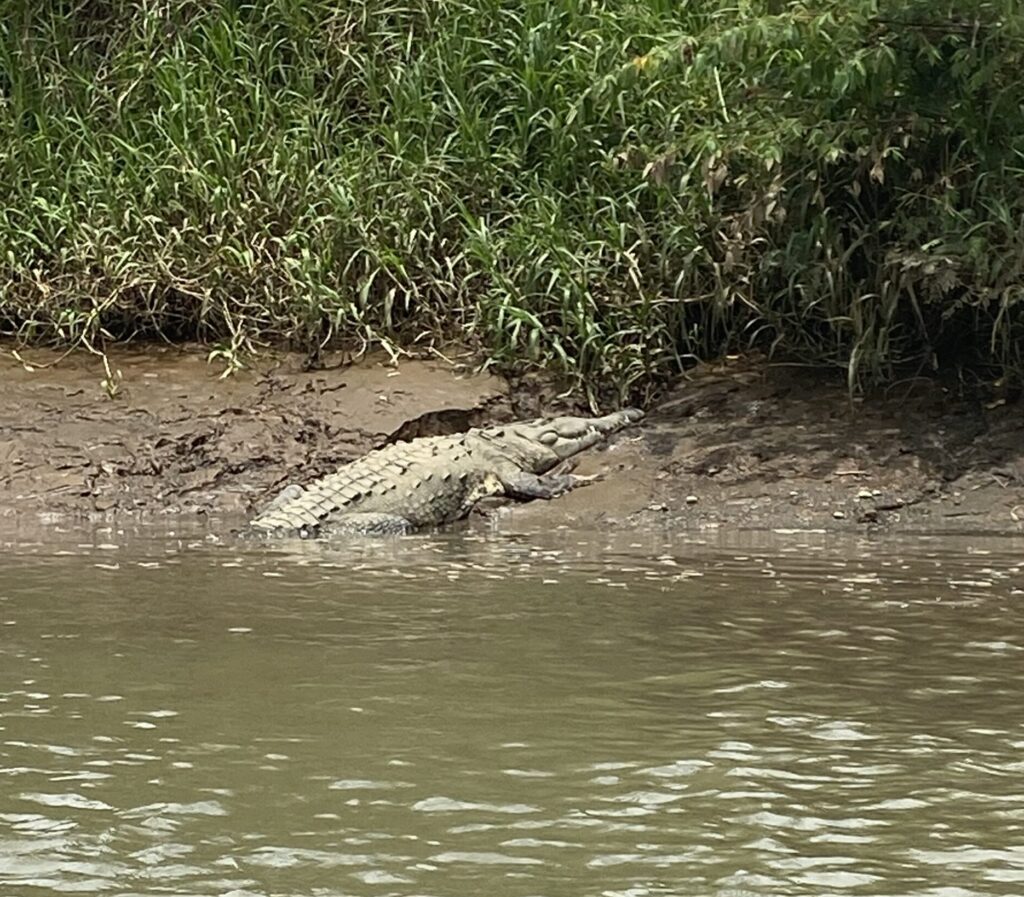
American crocodiles in the Tárcoles River 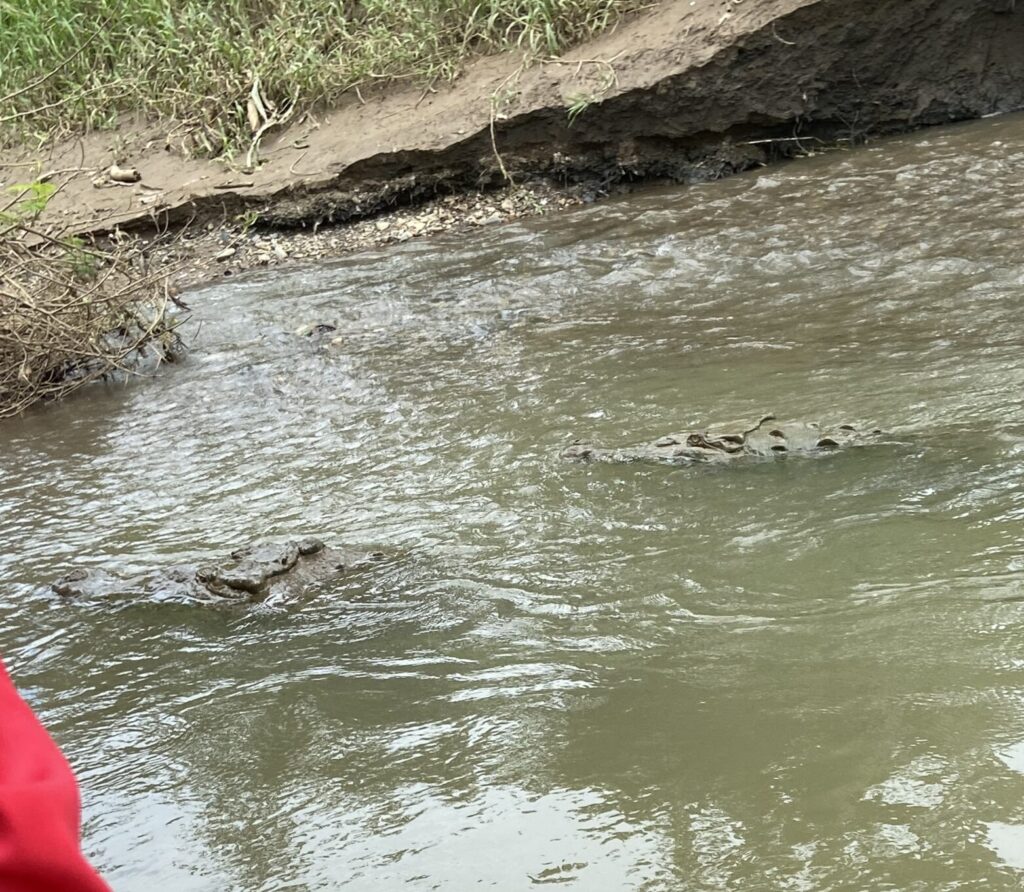
The American Crocodile is one of the largest reptiles found in Costa Rica and can be seen in rivers, wetlands, coastal lagoons and estuaries throughout the country’s lowlands. The Tárcoles River beside Carara is particularly famous for its large crocodile population, making the area one of the country’s best-known places to see these enormous reptiles. Adults can grow to several meters in length, although exceptionally large individuals are uncommon. Despite their intimidating appearance, American Crocodiles generally avoid humans, but they are still wild predators that should always be observed from a safe distance.
Common Basilisk
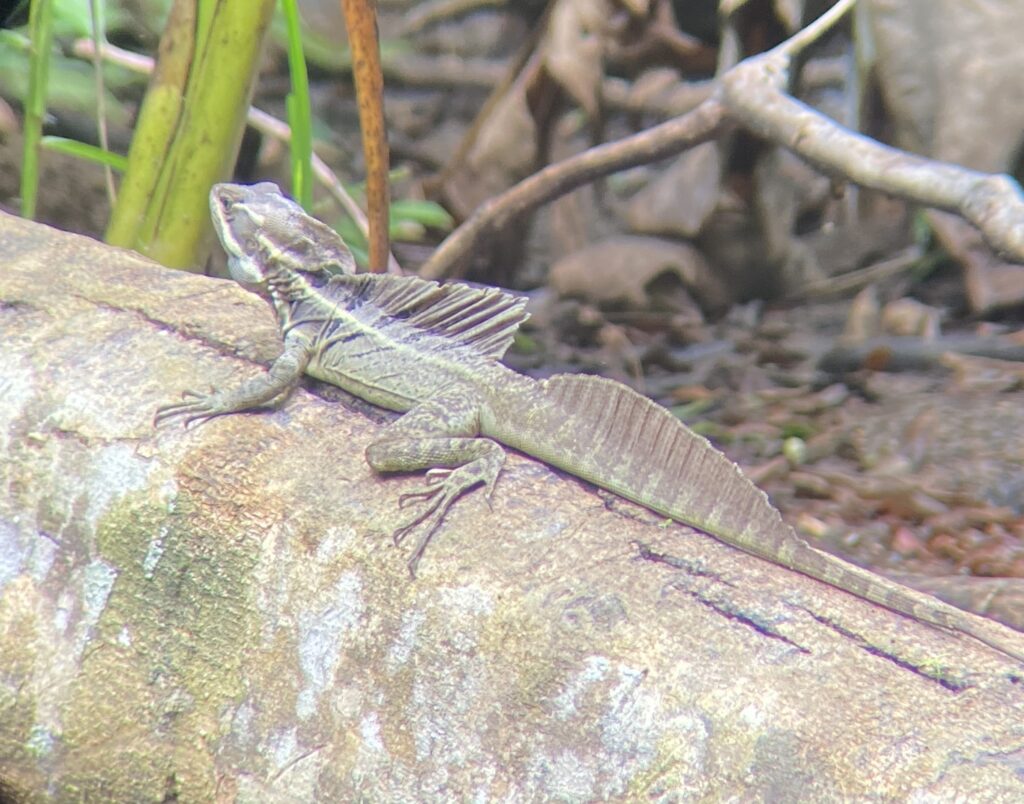
Common Basilisks in Carara 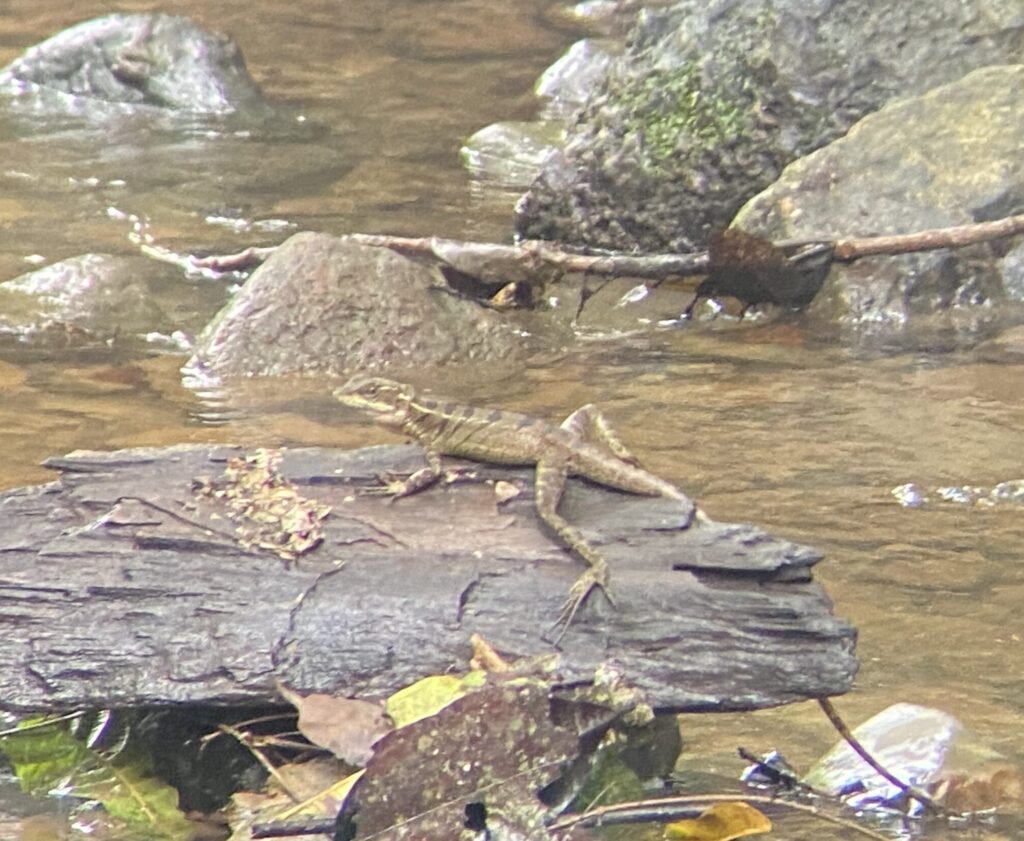
The Common Basilisk is one of the most recognizable lizards in Costa Rica and is famous for its remarkable ability to run across the surface of water, earning it the nickname “Jesus Christ lizard.” It is particularly common in the Pacific lowlands of Costa Rica, where it often lives near streams and other bodies of water. When threatened, it can sprint rapidly on its hind legs, using its long toes and specially adapted feet to stay above the water for short distances. Carara is a particularly good place to look for this species because the park’s forests and waterways provide suitable habitat.
Helmeted Iguana
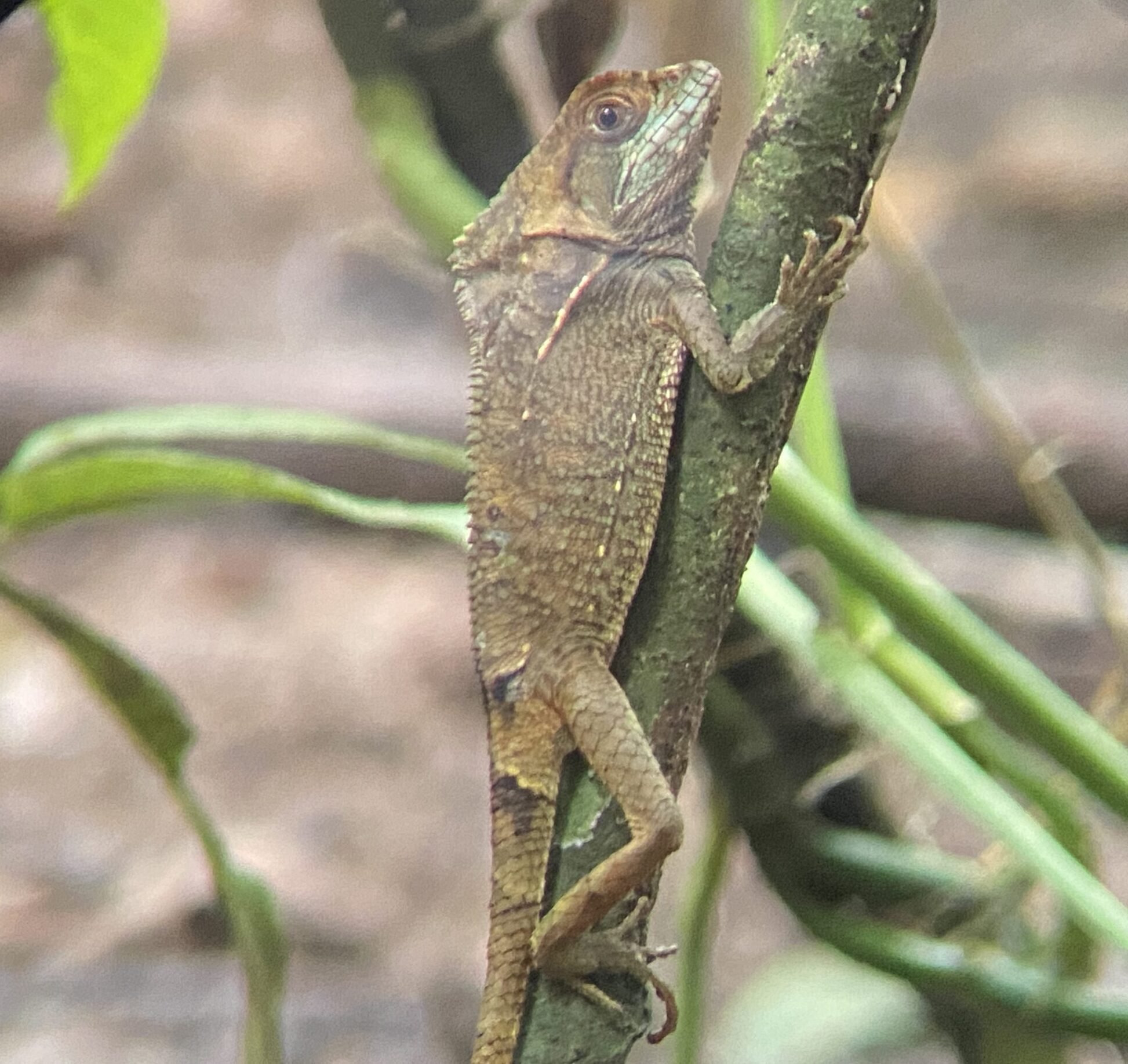
Despite its name, the helmeted iguana is not actually an iguana. It is a member of the basilisk family and gets its name from the prominent helmet-like crest on its head. This unusual lizard spends much of its time in forest vegetation and is an ambush predator that can remain remarkably still while waiting for insects, spiders and other prey. Its ability to change from lighter to darker colors helps it blend into its surroundings, making it a particularly interesting animal to find because you can easily walk past one without realizing it is there.
Greater Sac-winged Bat
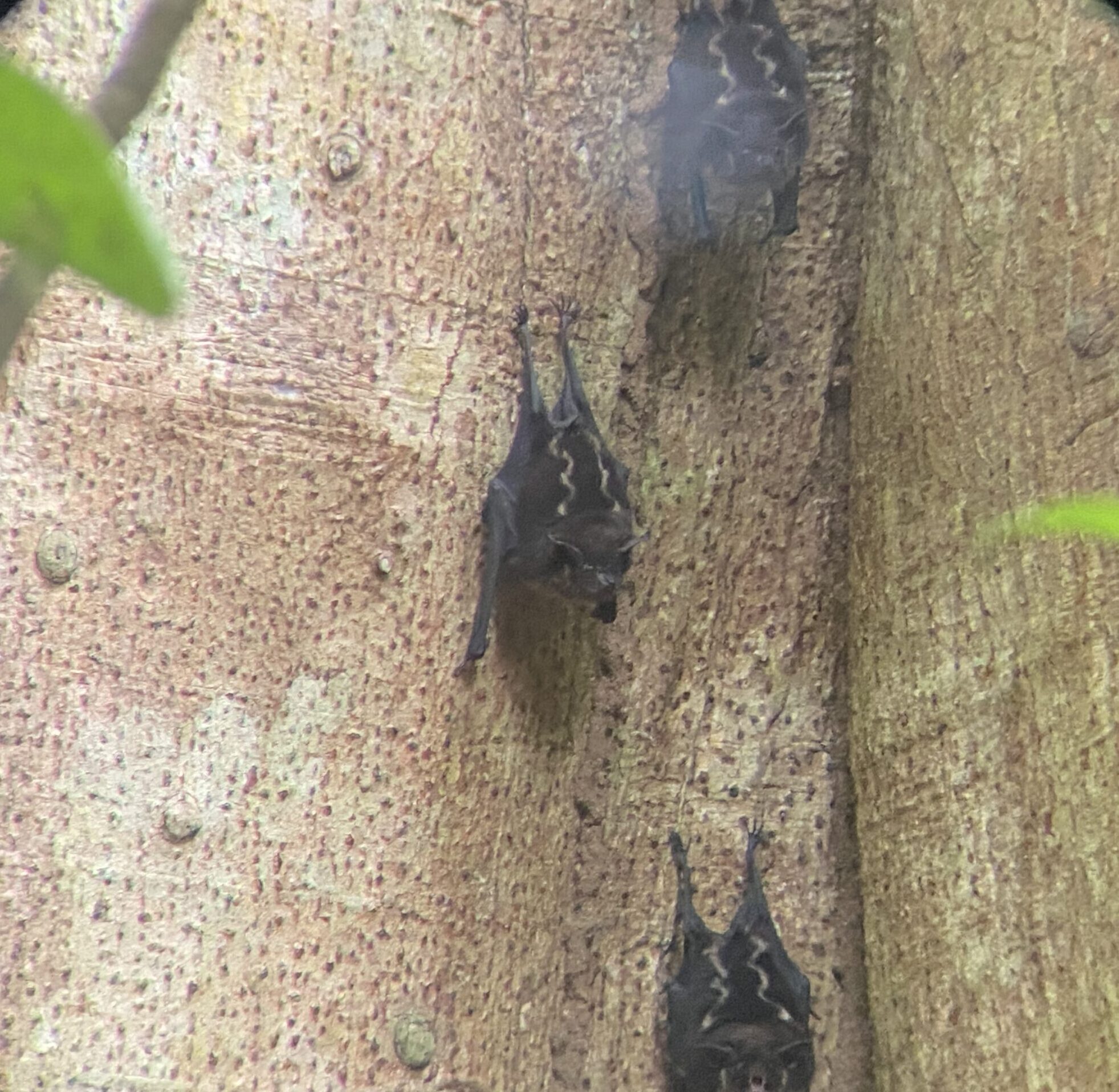
The Greater Sac-winged Bat is a small insect-eating bat that can be easy to overlook because it often spends the day hanging motionless in exposed roosts. It has two distinctive pale stripes running along its dark back and small sacs on its wings, which give the species its unusual name. Unlike many bats that hide in dark caves, Greater Sac-winged Bats commonly roost in places such as hollow trees, caves, cliffs and even human structures, sometimes in small colonies. They emerge after dusk to hunt insects, using echolocation to locate prey while flying only a few meters above the ground.
How to get to Carara National Park?
🚗 By Car:
Carara National Park is located directly along Route 34, the main highway connecting Costa Rica’s Central Pacific coast. From San José, take Route 27 toward Caldera, then take the exit toward Tárcoles and Jacó after the Pozón toll plaza. Continue on Route 34 for approximately 14 kilometers. The park entrance is about 2 kilometers south of the bridge over the Tárcoles River, making Carara an easy stop for travelers driving between San José and destinations such as Jacó and Manuel Antonio.
🚌 By Bus:
Carara National Park can be reached by bus from San José using Transportes Jacó, which operates services along Route 34 toward Jacó. The current route includes a stop listed as “Carara, Parque Nacional,” making it possible to travel directly from San José to the park without renting a car. The buses currently depart from Terminal Atlántico Norte in San José, following a route through Route 27 and then Route 34 toward Jacó. I personally took a bus from San José to my hotel in Jacó and then used an Uber to reach the park from there.
Interactive Map of Carara and the surrounding area
Some useful locations to see the animals listed above are marked on the interactive map below, making it easy to plan your visit to Carara and the surrounding area.